A conversation where we meet one of the key people who make Operahuset what it is. A person who plays an important role in the Opera House's story and contributes to the experiences, the hospitality and the inclusive gastronomy. Together, we continue to create memorable moments - one dinner, one party and one experience at a time.
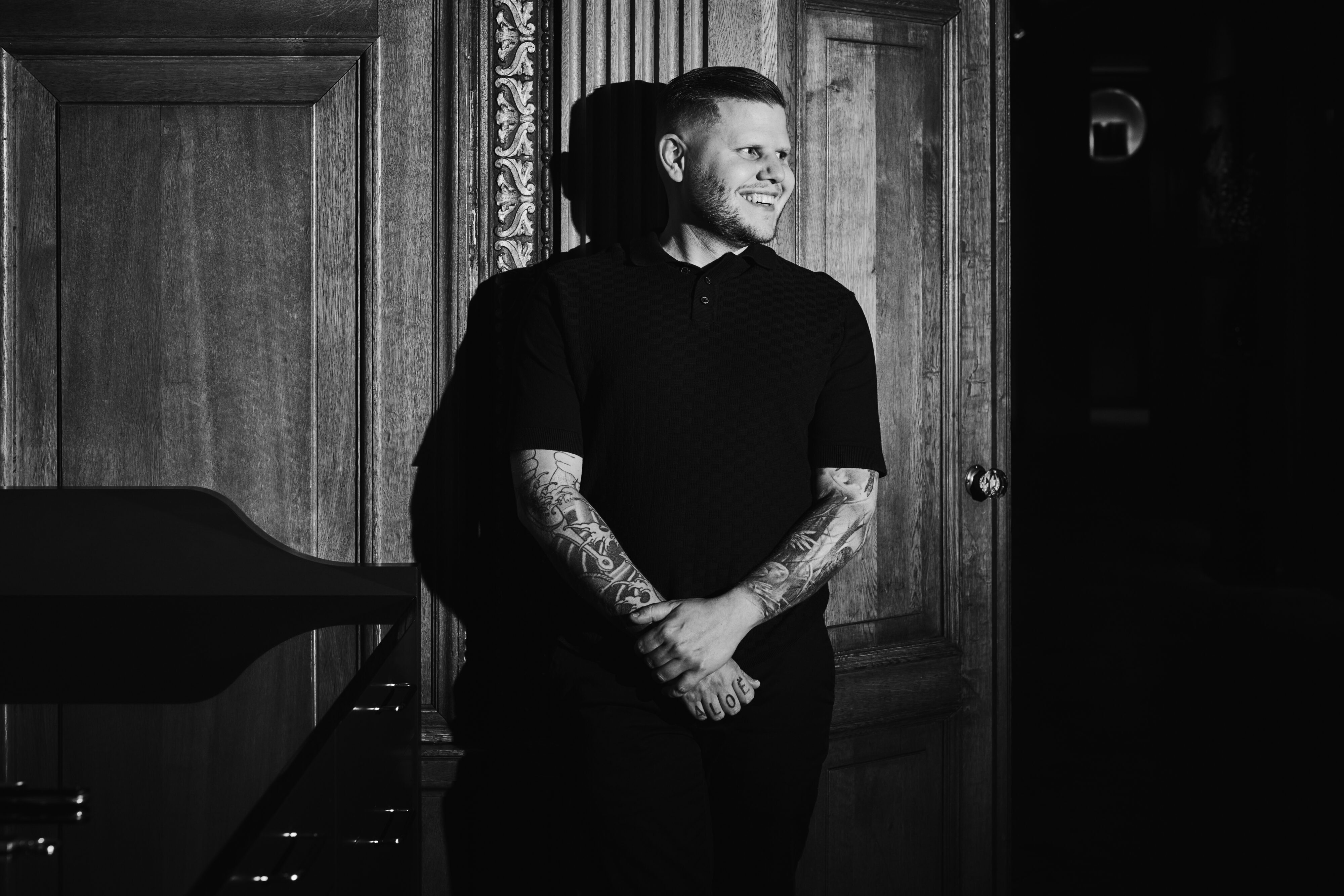
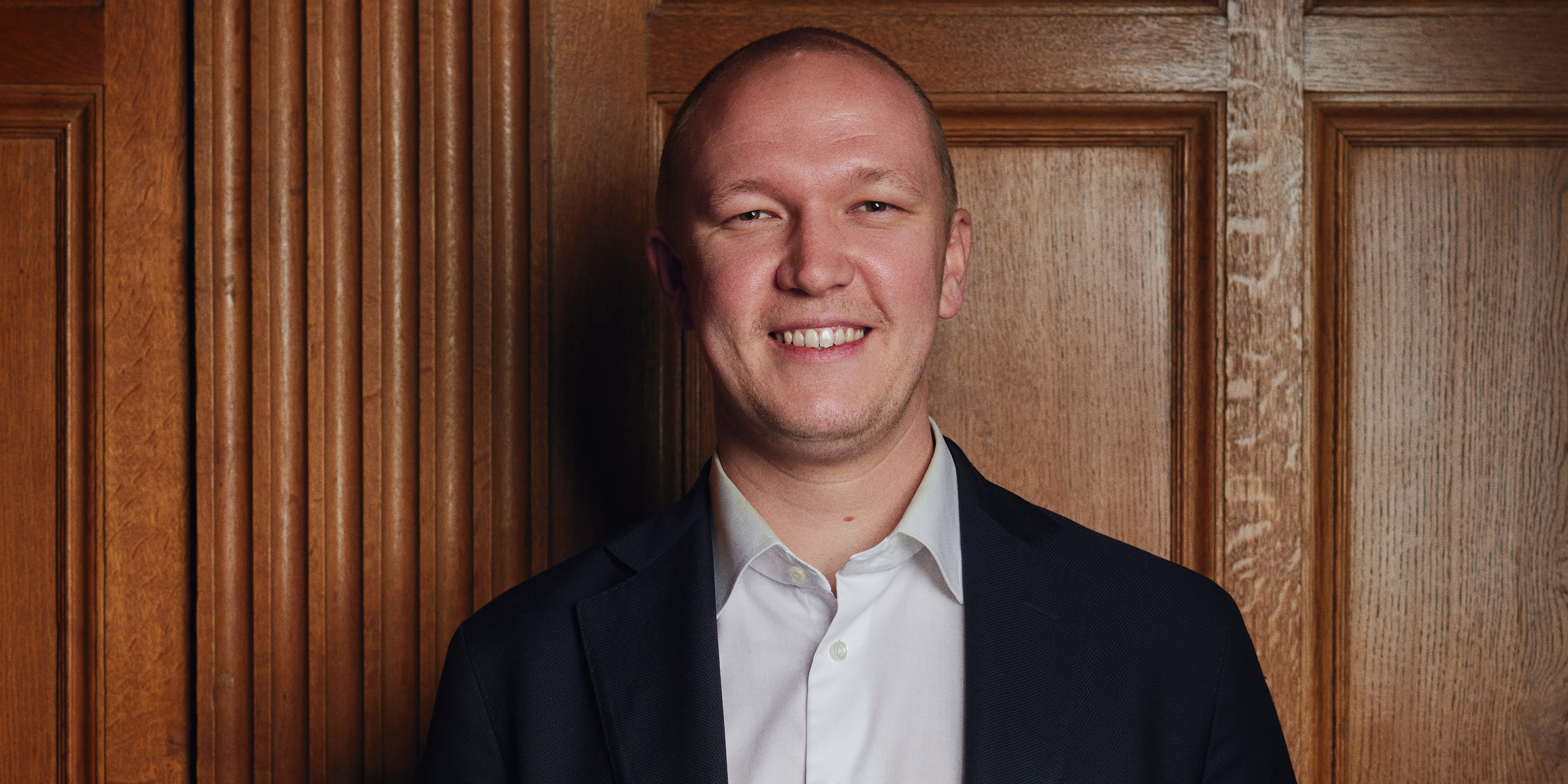
This time, we’re meeting Rasmus Klintberg, head sommelier at Operakällaren.
Hi Rasmus. Tell us a little about yourself.
I was born right into a family of restaurateurs. My mom was a pastry chef and a member of the national culinary team, and my dad is a sommelier, so there really wasn’t much to think about when it came to what I wanted to do.
I started working in restaurants when I was just 15. After graduating from high school, I stayed in the restaurant industry, but I did try my hand at sales for six months. I realized pretty quickly that it wasn’t my thing, so I went back to what I enjoyed and started working at Furillen on Gotland.
That’s when I decided that if I was going to do this, I was going to be really good at it. My dad gave me some books on wine, and I worked really hard while studying as much as I could in all my free time.
After a few seasons in Åre, I heard that Aloë was opening. I took the bus from Åkersberga to Älvsjö to meet the team, just one week before the opening, and started working there as a server shortly thereafter. I spent one last season in Åre, but then returned to Aloë full-time in April 2016, and the following year, Höglander offered me the position of head sommelier.
You were only 23 at the time—how did that feel?
I was terrified. But Daniel said something that really stuck with me: “If I believe in you, then you have to believe in yourself, too.” So I just had to accept that trust and go for it. In 2018, we earned our first Michelin star. Four months later, we decided to close, because Daniel felt it had become too much of a fancy restaurant in the wrong way. We reopened with a clear ambition to get two stars, which we did in 2020. Then the pandemic hit, and with the restrictions, I lost some of the energy and joy of restaurant life.
What happened next?
I moved on to Villa Dagmar to put together their wine list ahead of the opening. It was a completely different challenge—creating something for a hotel with a restaurant, a bar, and guest rooms. That’s also where I began to rediscover my joy, just as the world was slowly brightening up. Somewhere along the way, I realized I wasn’t done with fine dining. I was good friends with Johan Iller, who was then the restaurant manager at Operakällaren. When he was about to leave, he asked if I wanted to take over. Höglander taught me everything I know about gastronomy. He was innovative and challenging, but had a deep respect for history. That made the decision easy. Operakällaren the stronghold of Swedish gastronomy—working here is to write yourself into history.
I started in June. Ten days later, the head chef at the time, Viktor Westerlind, resigned, and shortly thereafter Höglander came into the picture—and we were back where we started.
What does it mean to be the head sommelier at Operakällaren, beyond the obvious?
At its core, it’s about managing the wine cellar, but also developing it in the right way. As the person responsible for all the wine throughout Operahuset entire Operahuset , I Operahuset with several wine lists—both at Operakällaren at Operabaren as well as with all the wine packages and pairings.
While I have a great deal of freedom, there is also a clear responsibility to understand and interpret Operakällarens —its history, values, and position. I cannot base my decisions on my own preferences but must remain objective in my choices.
The only significant change I’ve made is to shift the focus away from the U.S. and the New World, giving France and Europe an even stronger role. The French heritage, and the connection to Tore Wretman and Provence, is central here.
Tell us about Operakällarens .
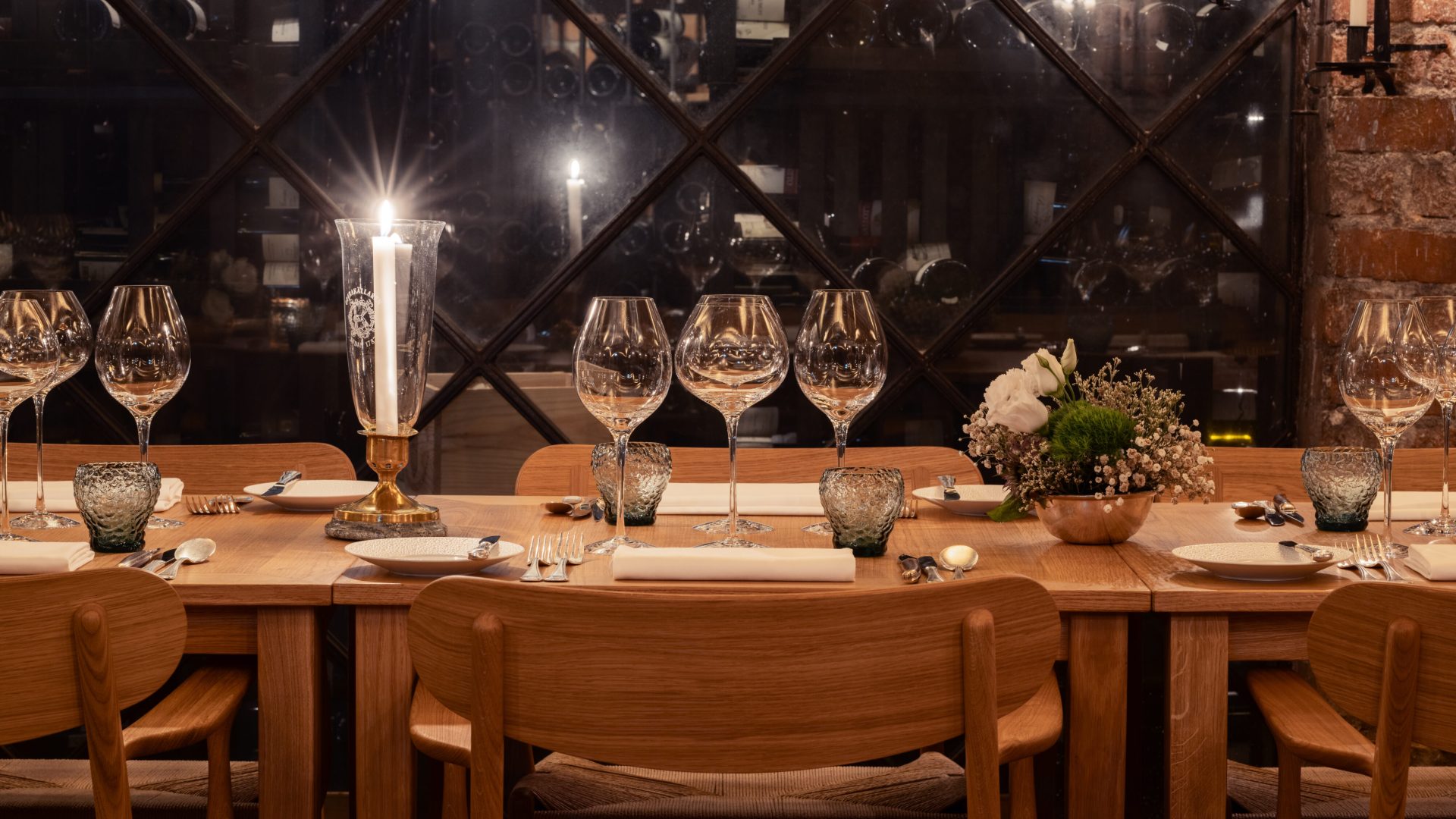
It was Sweden’s first temperature-controlled wine cellar when it opened in 1961. At that time, it was also common for private individuals to store their wines here.
The foundation for the wine cellar we have today was laid by Jean Paul Benezet, who served as cellar master at Operakällaren many years. A native of France, he built up the collection with a focus on Bordeaux and Burgundy. Since then, it has been managed by skilled sommeliers.
One of the most unique aspects of our cellar is our verticals. Since there have been relatively few head sommeliers over the years, we’ve been able to continue purchasing wines from the same producers, which has created great depth. Domaine de la Romanée-Conti is a prime example; I believe we have one of the largest collections of their wines. It is precisely these verticals that give our wine list such depth. At the same time, we have a very broad selection of Champagne and Burgundy, where we work with many producers.
What do you do if a guest wants to buy a bottle that would break up a vertical tasting?
I probably shouldn't say this if the owners are listening, but I prefer not to break up vertical tastings. I would probably try to steer the guest toward a different vintage instead, haha.
How many bottles are there in the cellar?
Between 35,000 and 40,000 bottles.
How would you describe your relationship with wine—craft, passion, or obsession?
It’s my passion. I think about wine pretty much all the time. When I travel, I love to visit a wine region. When I read, it’s usually about wine. I probably have around 200 bottles at home. Wine, soccer, and music are three pillars of my life, along with food. Cooking is my therapy—putting on music and standing in the kitchen for hours. And the world of wine is endless. It encompasses chemistry, history, and culture. The more you learn, the more you realize how much there is left to discover.
Name a wine that has left a unique impression on you.
I was on a trip to Bordeaux and visited several of the classic châteaux, but a lunch at Château Margaux really stands out. It’s like a fairytale castle—the most beautiful in all of Bordeaux. We sat in their cellar, around a large wooden table, and drank Château Margaux 1954. You usually want to put into words what you’re drinking, but there, it was truly impossible. It was just pure joy.
What is it about wine that still fascinates you?
The fact that there’s always more to learn. You can never fully master it—and even if you did, everything is constantly changing.
But today, hospitality is almost just as important to me. It’s about how you make people feel. Small gestures, smiles, thoughtfulness. Having the chance to influence a guest’s experience—sometimes even their day or their mood. That’s what makes service so special—and what makes it so rewarding to be part of developing restaurants.
How do you approach the balance between prestige and accessibility in a wine list?
It’s easy to be blinded by prestigious wines, especially early in one’s career. But I quickly realized that only a very small portion of the world has both the interest and the means to drink those wines. A large part of the work therefore revolves around the rather elusive concept of “good value.” It is in that balance that the craft lies—between the exclusive and the accessible. And it’s important not to let your own ego take over, because most guests fall into the latter category.
How closely do you work with the kitchen?
Very closely. We have weekly meetings to discuss dishes and wine, and as soon as the kitchen has an idea, I get an initial sense of the flavor profile so I can start thinking in the right direction. Then we taste them together. Sometimes broadly, sometimes more precisely. Recently, we tested 32 different wines with a scallop before we found the right one. In other cases, two might be enough. It’s a constant interplay where both sides make adjustments until everything really comes together.
What makes a wine pairing truly memorable?
When it’s not just a good match, but when the elements truly enhance each other. When it feels like one plus one equals three.
How do you read a guest in a matter of seconds?
I don’t think I have a specific method; it happens quite intuitively. But I always try to approach my job with the mindset of taking it very seriously, without taking myself too seriously. Otherwise, there’s a risk of coming across as condescending to the guest, and then you lose something very important.
We recently had a wonderful group of young guests who were quite nervous about being in this kind of setting. I told my sommelier colleague Linus that we had to do something to help them relax, so we decided to serve them vodka and Red Bull—but we poured the Red Bull into a wine decanter, haha. The whole group started laughing and really relaxed after that. Sure, we’re at Operakällaren but the most important thing is that the guest feels comfortable. That’s what they’ll remember.
Is there anything you wish guests would order more often?
Sherry. It’s perhaps the wine in the world that offers the most complexity for the money.
How does the setting influence the way you serve wine?
At Operakällaren , the dining room service Operakällaren almost like a performance. Everything is part of the experience—flambéing, serving, the way you move around the room. Opening a bottle isn’t just an action; it’s almost part of the show.
How do you handle the pressure?
A lot of it comes down to experience. I don’t feel the same pressure today, and I try not to take myself too seriously. That allows me to enjoy it more.
What do you drink yourself when you're not working?
Champagne and sherry.
Can you recommend some affordable wines?
Check out our limited-time selection—there are plenty of hidden gems there. But two specific recommendations are Chinon, Cuisine de ma Mere, 2024, for 149 SEK, and Sancerre Les Roches Domaine Vacheron, 2024, for 339 SEK.
If you weren't working with wine—what would you be doing?
Probably something related to soccer. Maybe as a soccer journalist.
What part of the evening do you enjoy the most?
The hour right before the guests arrive. I take a moment to myself, have a cup of coffee, drink some water, and mentally prepare. I set aside my more introverted side and step into my role. But I also love when service is in full swing, when the room is bustling, and I get to interact with the guests.
Warmth and joy. That it was memorable.
If you could take one bottle from the cellar, which one would you choose?
Romanée-Conti 1989. One of the world’s most iconic vineyard sites and a fantastic vintage. Otherwise, I’d love a 1979 Salon.