




A conversation where we meet one of the key individuals who make Operahuset what it is. A person who plays a vital role in Operahuset's story and contributes to the experiences, hospitality, and inclusive gastronomy. Together, we continue to create memorable moments – one dinner, one celebration, and one experience at a time.
This time, we're meeting Jesper Gren, head chef at Operakällaren.
Hi Jesper! Tell us about yourself and how you ended up at Operakällaren?
I grew up in Stockholm with a dad who’s a chef and has run restaurants my whole life. I started working part-time while I was still in high school, and after graduation, I went into the restaurant business full-time. Since then, I’ve worked at places like Lilla Ego, Mathias Dahlgren, and Aloë. It was also through Daniel Höglander that my path eventually led me here. When he passed away, I joined Operakällaren and took on the role of head chef.
When did you realize that cooking would become your career?
Looking back, I suppose it’s always been there, largely thanks to my dad. But it wasn’t until I started working for real that I fell in love with the whole lifestyle surrounding the restaurant—the late evenings, the nights, the people. It’s not your typical, run-of-the-mill life, and it’s suited me very well. I’ve never regretted it.
What does it mean to be a head chef at Operakällaren
It’s so much more than just standing there and cooking. I create menus and dishes, train the staff, build the team, and constantly strive to move us forward. And I work very closely with the dining room, because what we do in the kitchen has to work all the way through to the guest.
A lot of it is also about constantly staying true to our identity and developing it. What we do should feel like “ Operakällaren.” Each dish should have a distinct character and its own concept—not something you could just as easily eat at ten other restaurants. That’s one of the most enjoyable parts of the job.
How do you find inspiration?
For me, a dish rarely starts with a specific ingredient, but rather with a feeling I want to evoke. Inspiration can come from music, books, or really anything that stirs something inside me. From there, I start thinking about how eating the dish should feel. Is it feminine or masculine? Soft or powerful?
Truffles, for example, are a rather masculine flavor to me. That impression can then guide how the rest of the dish is put together, from the flavors to the presentation.
At its core, the entire experience is very much about care. Just as the service staff takes care of the guests in the dining room, we do the same through our food. There should be a sense of warmth in what we serve and in how we treat the ingredients, whether they’re grilled, fried, or prepared in some other way entirely.
What does it take to make a kitchen at this level run smoothly night after night?
Above all, a tremendous amount of passion. At this level, you can’t really think of it as a job you leave behind when the workday is over—it becomes a way of life. Work and personal life blend together, colleagues become close friends, and the restaurant takes up a major part of your life.
I also think that genuine interest is something that’s hard to learn. Either you have it, or you don’t.
What are you most particular about?
Most things, I’m sure many people here would say. I know how I want things to be, and I like it when everything has its place and stays where it’s supposed to be.
But above all, I’m particular about the fact that you’re actually “cooking” food. There’s no set A-to-Z process. You might have made the same dish a hundred times, but the mango you get today isn’t exactly the same as the one you had yesterday. So you have to taste it, feel it, and adapt to what’s in front of you. You can’t just follow a recipe—you have to cook.
What sets a really good chef apart from an exceptional chef?
A really good chef may be highly skilled at the task at hand. With an exceptional chef, you can tell that their vision extends far beyond that. Even when you’re just talking to them, you can see that they understand the entire process—from the ingredients and preparation to orders, organization, and everything happening around them.
It’s also very much about relationships and understanding your role on a team. When all of that is in place, you have something more than just a very skilled chef.
What is the hardest thing to teach a young chef?
The big picture, without a doubt. Every ingredient that comes into the kitchen has value and context. It costs money, someone produced it, and ultimately, it becomes part of the guest’s experience.
Our responsibility lies somewhere in between. Raw ingredients must be handled, processed, and used as much as possible without unnecessary waste. At the same time, all the work that goes into it should ideally feel completely seamless to the guest. Understanding the entire chain and eventually making it second nature takes time.
Which ingredient still genuinely makes you happy when it arrives in the kitchen?
Wild game birds. Everything from capercaillie to red-breasted goose. Poultry in general is a joy to work with—these are ingredients that still bring me great joy when they arrive in the kitchen.
Is there any technique you think every truly great chef must master?
Being able to work with the whole ingredient. For me, that means, among other things, being able to butcher whole animals—from fish to roe deer—but also knowing what to do with every part you get.
If there are small pieces of fish left over, they shouldn’t automatically be considered unusable. They can be turned into a mousseline or something else. Technique isn’t just about being able to prepare the finest cut, but about having the knowledge to make the most of the whole piece.
Which ingredient do you think is the most underrated?
Fruit. We use an incredible amount of fruit in our food, and I still feel like there’s this idea that it’s almost a bit of a taboo. For us, on the contrary, it’s a natural part of many dishes.
Can you give an example?
During scallop season, for example, we made a sauce with mango, pineapple, physalis, and yellow tomatoes that were lightly steamed and pureed. We then added vanilla, tomato water, and cilantro to give it a fresh flavor.
We also use dates and apricots a lot, including in compotes. Fruit provides a natural sweetness that allows you to build flavor in a completely different way without having to add sugar.
What does it mean to cook in a house with so much history?
It has meant an incredible amount, not least because we were entrusted with coming in and making a fairly significant change. We turned a lot of things upside down, created something new, and at the same time quickly found a new circle of guests.
At the same time, change is also part of the history of “ Operakällarens .” Wretman made a huge impact in his day and faced a lot of criticism for how much he innovated. A building like this must be able to carry its history without standing still. Being able to help develop “ Operakällaren ” in our own way has been very special.
What do you think characterizes the food at Operakällarens today?
The foundation lies in French gastronomy, but we draw our flavors and inspiration from all over the world. Influences can come from very different places, but the techniques and craftsmanship tie it all together. French gastronomy with flavors from around the world is probably the simplest way to describe our food.
What do you think would surprise people the most if they were able to observe an entire service in the kitchen?
Just how much of a dance it actually is. On the one hand, how many people it takes to make an evening run smoothly, and on the other, how well everyone has to work together.
When you have a skilled and well-coordinated team, there’s almost a choreography to the way everyone moves and works together. Each person knows what’s going to happen and when, while constantly reading each other’s cues. When it works at its best, the guest doesn’t notice any of what’s going on behind the scenes. It just flows.
What’s your favorite moment during a service?
When the guests first walk in. They have the whole evening ahead of them and still don’t quite know what to expect. We know what we’ve prepared and what we want to offer them, while they’ve just sat down at the table. There’s something really special about that exact moment.
What does the head chef at Operakällaren cook when he doesn’t have to impress anyone?
A lot of Asian food. I especially like Sichuan and Cantonese cuisine—hot pot, ramen, stir-fries, and dishes like that. Lots of flavor without having to be particularly complicated.
What do you like to eat after a long shift?
It's nothing too fancy. Usually just coffee and a sandwich.
What classic dish could you never live without?
Coq au vin.
What's your biggest guilty pleasure when it comes to food?
Dumplings.
Name a dining experience that has had a big impact on you.
VYN was one such experience. I was there about a year ago and thought it was absolutely fantastic. Not just the food, but everything about it—the decor, the attire, the service, the flavors. The whole experience comes together.
It’s not the kind of restaurant I would open myself, since I don’t cook Swedish food that way, but I have enormous respect for what Daniel Berlin is doing. I wouldn’t be surprised if they earned three stars.
This is “ Operakällarens ”’s final season before the restaurant closes for a major renovation. How does it feel to be working in the kitchen right now?
Above all, it feels really great that we’re the same group sticking it out all the way to the end. Many of the team members have been here the entire time I’ve been here, and getting to wrap up this chapter together means a lot.
Of course, it’s also special to be here as a chapter like this comes to a close. “ Operakällaren ” is a legendary establishment, and actually getting to stand here in the kitchen during these final days is something I think we’ll all carry with us.
What will you miss the most?
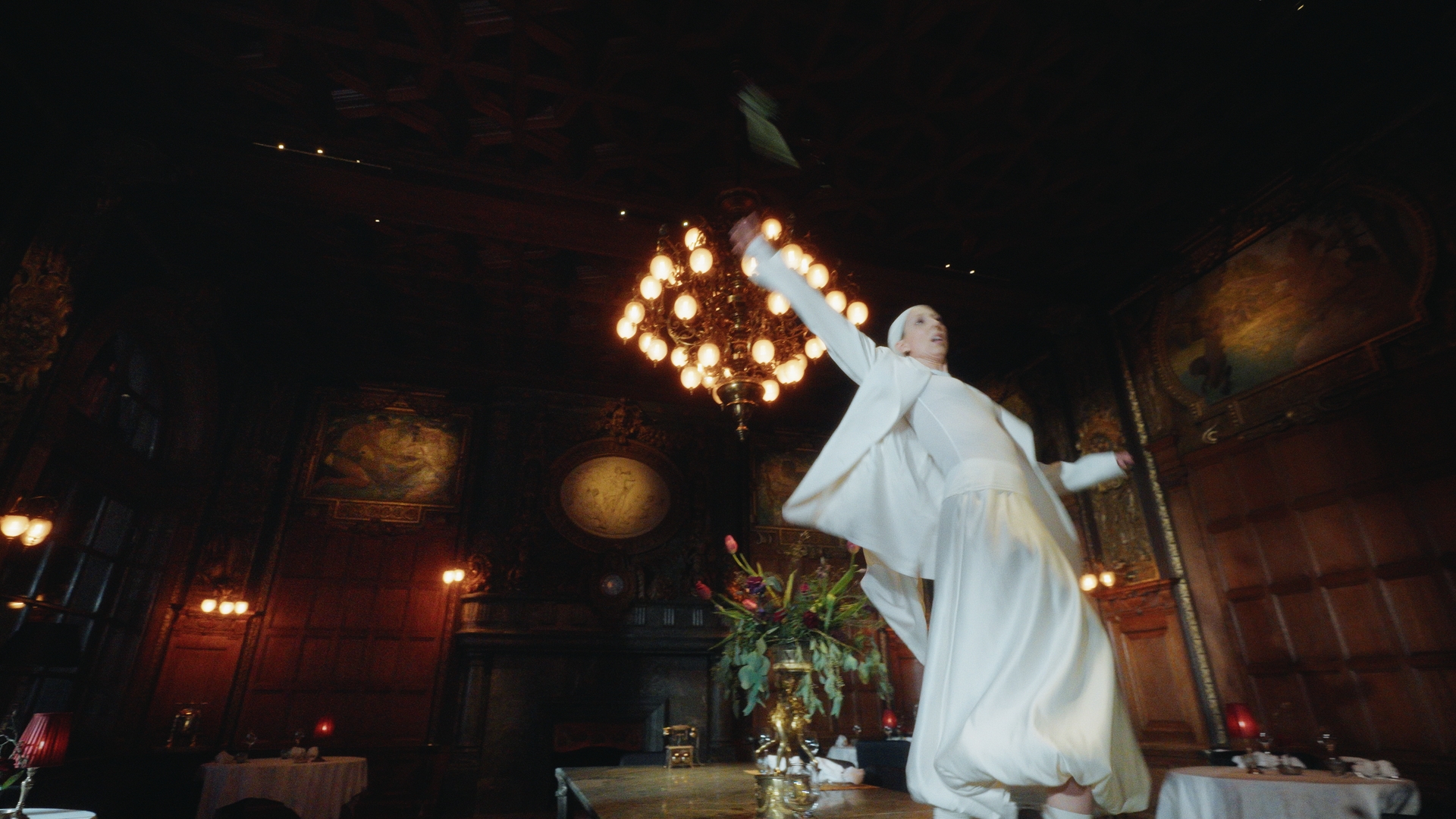
The dining hall, without a doubt. It’s so extraordinary that it’s almost hard to take in, especially when you’re here every day and somehow get used to it.
Sometimes you almost have to remind yourself where you actually are. Being able to cook a meal that is then served in that room is a privilege—and something that far from all chefs get to experience.
When the last service is over—what do you think you’ll be thinking about as you walk out the door?
I think I’ll have very mixed feelings. The building needs to be renovated, so it feels like the right thing to do, but at the same time, it will of course be sad that this chapter is over. Above all, I’ll feel an enormous sense of pride in what we’ve accomplished here—how we’ve developed the product, from the dishes and service to the entire experience. And then there are all the people I’ve gotten to know along the way. Not least of all, my team.
If you could take one thing home with you after the last night—what would it be?
The duck press, without a doubt.


